
AI for healthcare
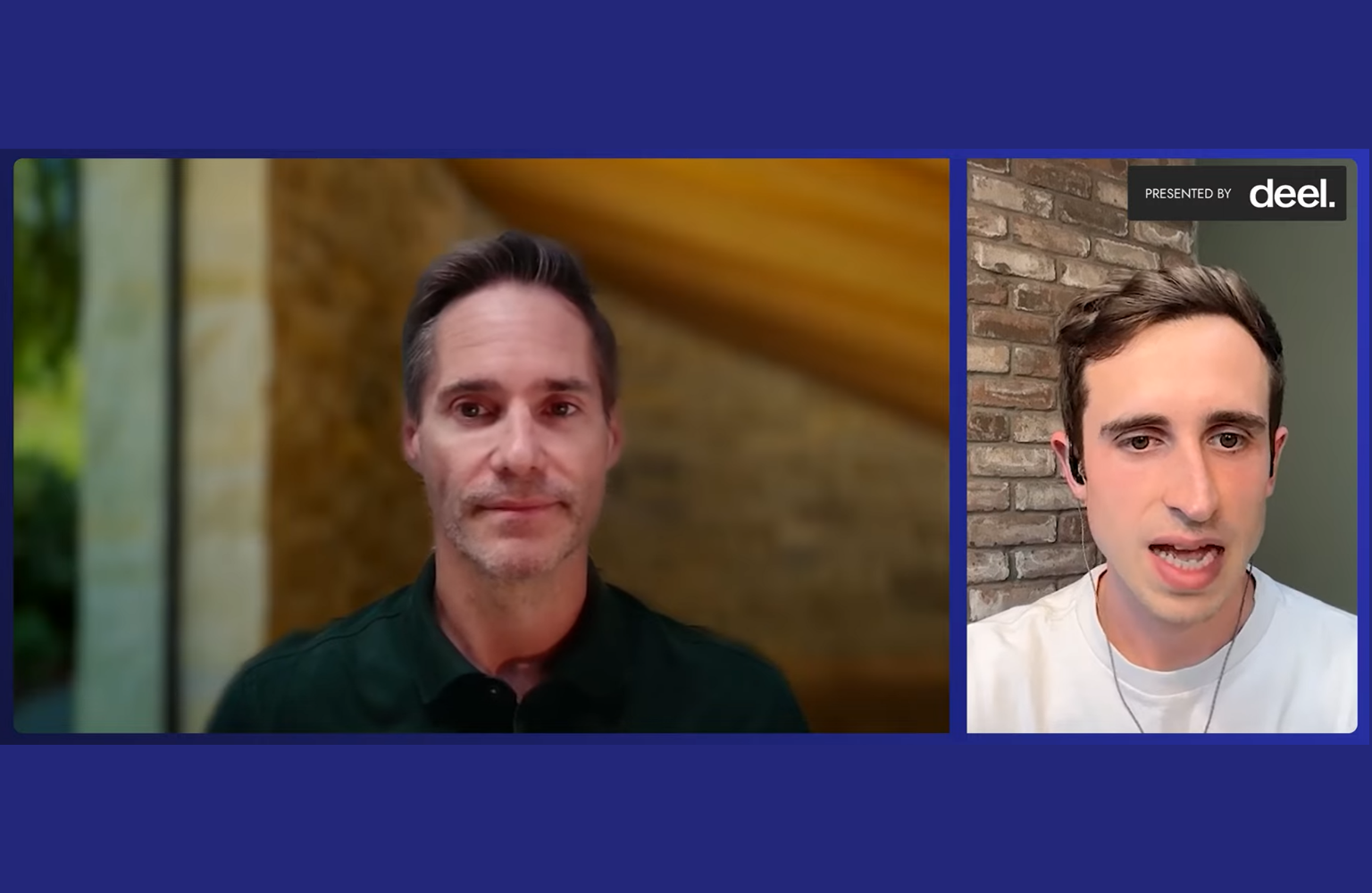
Skin Analytics on Scaling Europe
September 21, 2026
Neil Daly, Skin Analytics CEO, joins Seb Johnson on Scaling Europe to talk…
Read more

Skin Analytics response to the National Cancer Plan for England
February 5, 2026
Read more

Jersey GP practice becomes first in Channel Islands to use DERM to triage suspected skin cancer cases
December 2, 2025
Read more

Skin Analytics partners with Human Bytes to bring DERM to the Nordic countries.
November 4, 2025
Read more

AI versus skin cancer: the future of dermatology diagnosis
September 15, 2025
Read more

Affidea Partners With Skin Analytics to Improve Access to Skin Cancer Assessment Across Europe Using AI Technology
August 19, 2025
Read more

NHS 10-Year Health Plan: For AI skin cancer pathways to be standard care by 2028, adoption needs to start now
July 17, 2025
While the NHS 10-Year Health Plan highlights that by 2028 AI skin cancer…
Read more

Skin Analytics invited to the Science Innovation and Technology Committee meeting
July 7, 2025
Neil Daly, CEO & founder of Skin Analytics, appeared before the UK…
Read more

NICE recommends DERM for early use within the NHS, while further evidence is gathered – Commentary from Neil Daly, Founder and CEO, Skin Analytics
May 1, 2025
On May 1st 2025, the National Institute for Health and Care Excellence (NICE)…
Read more

Future Medicine AI Hub Podcast: AI for dermatology
April 15, 2025
Dr Alice Plant, Consultant Dermatologist at University Hospitals Dorset NHS…
Read more

The Scrubbed In Show: AI-Powered Skin Cancer Detection for the NHS with Neil Daly, Skin Analytics CEO
December 20, 2024
In this week’s episode of The Scrubbed In Show podcast, our CEO Neil Daly…
Read more

Skin Analytics awarded a place on the G-Cloud 14 Framework
November 11, 2024
We’re thrilled to share that Skin Analytics has been awarded a place on the…
Read more

BMA: 7 Principles for Artificial Intelligence (AI) and its application in healthcare
November 6, 2024
The BMA recently published their principles for Artificial Intelligence (AI)…
Read more

Do you see what we see? Skin Analytics’ CEO, Neil Daly, interviews with L’Atelier BNP Paribas
November 1, 2024
In a recent article from L'Atelier BNP Paribas, Alex Hadwick breaks down the…
Read more

Wes Streeting mentions Skin Analytics’ work at the Labour Party Conference 2024
September 26, 2024
Mentioning the work we’re doing here at Skin Analytics with the NHS,…
Read more

Lord Darzi: “We are on the precipice of an artificial intelligence (AI) revolution..”
September 13, 2024
Professor Lord Darzi's latest report is confronting. But here is why our CEO,…
Read more

AI Shown to Outperform Human Experts for Skin Cancer Detection – NHS England Report
September 4, 2024
A new report commissioned by NHS England (NHSE): Evaluating Pathways for AI…
Read more

Post-market Surveillance of AI medical devices
August 12, 2024
Skin Analytics joins the Royal Society of Medicine, Digital Health Section…
Read more

AI Appreciation Day 2024
July 16, 2024
It’s AI Appreciation Day so we’re celebrating the human behind our AI as a…
Read more

Prime Minister, Rishi Sunak and Skin Analytics invited to see the brilliant work being delivered at Woking Community Hospital
April 15, 2024
Rishi Sunak and Skin Analytics were invited to a meet and greet at Woking…
Read more

Skin Analytics achieves Class IIa UKCA Mark for DERM. The UK’s first and only Class IIa certified AI dermatology device
April 19, 2022
Now a Class IIa medical device, DERM, uses machine learning algorithms to…
Read more

Discussing the systematic review of skin cancer datasets in The Lancet: Skin Analytics response.
November 16, 2021
We were delighted to see research into the publicly available skin cancer…
Read more

Skin Analytics Receives NHSX Award for AI-Based Skin Cancer Tool
July 14, 2021
Created to accelerate the evaluation of Artificial Intelligence (AI)…
Read more

Google’s move into skin cancer analysis is great news for patients and Skin Analytics
June 3, 2021
Google’s announcement of the culmination of three years of work and a…
Read more